



Before you leave...
Take 20% off your first order
20% off
Enter the code below at checkout to get 20% off your first order
New look. New system. Same obsession with books. 📖 Old accounts are history—sign up fresh in 30 seconds! Create an account.
New look. New system. Same obsession with books. 📖 Old accounts are history—sign up fresh in 30 seconds! Create an account.
New look. New system. Same obsession with books. 📖 Old accounts are history—sign up fresh in 30 seconds! Create an account.
New look. New system. Same obsession with books. 📖 Old accounts are history—sign up fresh in 30 seconds! Create an account.
New look. New system. Same obsession with books. 📖 Old accounts are history—sign up fresh in 30 seconds! Create an account.
New look. New system. Same obsession with books. 📖 Old accounts are history—sign up fresh in 30 seconds! Create an account.
New look. New system. Same obsession with books. 📖 Old accounts are history—sign up fresh in 30 seconds! Create an account.
New look. New system. Same obsession with books. 📖 Old accounts are history—sign up fresh in 30 seconds! Create an account.
New look. New system. Same obsession with books. 📖 Old accounts are history—sign up fresh in 30 seconds! Create an account.
New look. New system. Same obsession with books. 📖 Old accounts are history—sign up fresh in 30 seconds! Create an account.
New look. New system. Same obsession with books. 📖 Old accounts are history—sign up fresh in 30 seconds! Create an account.
New look. New system. Same obsession with books. 📖 Old accounts are history—sign up fresh in 30 seconds! Create an account.


Couldn't load pickup availability
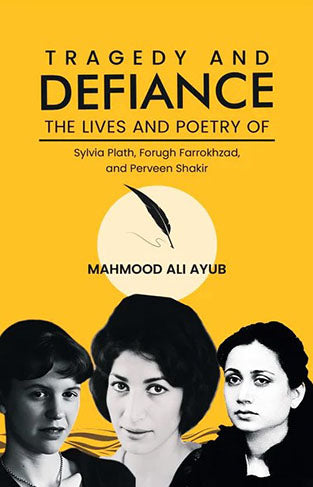
Three countries. Three languages. Three cultures. Three backgrounds. Sylvia Plath, Forugh Farrokhzad, and Perveen Shakir were born in cities thousands of miles apart. Plath was born in Boston, Massachusetts, U.S.A.; Farrokhzad in Tehran, Iran, and Shakir in Karachi, Pakistan. Even though all three were born and died in the twentieth century, they had a total overlap of only eleven years, from Shakir's birth in 1952 to Plath's death in 1963. Perveen Shakir was very much informed and aware of Forugh Farrokhzad and her poetry, which greatly appealed to her because of its forceful challenge to her conservative, patriarchal society. Shakir had even dedicated a poem to Farrokhzad. However, the two had never met, even though both traveled outside their countries from time to time.The three poets being presented here did have commonalities. All three lived and died in the twentieth century. All three generally lived depressing lives and ended up with heartbreaking divorces. All three, in their own ways and their own cultural contexts, had to deal with suffocating patriarchy, marked by severe gender biases in which women were relegated to lower-paying jobs or childbearing responsibilities. All three died very young. Plath at 31, Farrokhzad at 32, and Shakir at 42 years. Eerily enough, Farrokhzad had been told by a Roma (gypsy) fortune-teller in Italy of a serious accident in her future. In the case of Shakir, a fortune-teller in New Delhi had similarly predicted her death in an accident. And even though no fortune-teller had presaged Plath's death, in her poem “Lady Lazarus, she imaged her corpse surrounded by “the peanut-crunching crowd. In the cases of Plath and Shakir, they were children of immigrant parents. Plath's parents originated from Europe, and Shakir's parents migrated from India to Pakistan at the time of independence of the two countries in 1947 from the British Empire. Finally, all three were politically engaged. Plath was preoccupied with and deeply concerned by nuclear armament, its potentially devastating global impact, and unbridled capitalism and industrialism. Farrokhzad was bitterly opposed to what she perceived as the Pahlavi dynasty's pretentious, ill-advised, and shallow economic and social development that further enriched the better off while dragging down the poor. Similarly, Shakir continually raised her voice in support of low-income industrial workers and domestic servants in Pakistan. Several of her poems were dedicated to and decried the plight of these vulnerable groups.This book does not have an ambitious objective. The purpose is to examine how these three poets have elements of commonality despite their cultural differences. In the process, my objective is to explore some common aspects of their lives and work. How did they cope with the social constraints and mores of their cultures? How were their approaches different, dictated, and colored by their different cultural milieux? How did they cope with their familial relationships with their fathers, mothers, and husbands? What was the impact of their surroundings on their lives and their poetry? How were they received during their lives? And what legacy did they leave behind?A question that can logically and understandably be asked is: what is the interest of a male writer in his mid-seventies who has been a practicing economist throughout his life, in the lives and poetry of three women poets whose work was mainly accomplished in their youth? One answer is that for a long time the work of these poets appealed to my senses, and they were one reason that I was forcefully pulled to poetry. In other words, it was only a question of time before I would decide to write about these poets as a group. A second, more personal, reason was that two of the poets, Farrokhzad and Shakir, died at a young age in vehicle accidents. Sadly in my case, my son also died in April 2017 at the age of 32 in a motorcycle accident. A few years later, my beloved wife and partner of almost 50 years died in April 2023 of ALS (Lou Gehrig's Disease). April indeed has been the cruelest of months. These tragedies made me empathize with the three poets who adorn this book. My tragedies also made me ponder on the unpredictability of life, and how tragedies are lurking in the shadows to pounce on us unexpectedly.The first three chapters include short biographies of the three poets, followed by a brief examination of their work. Much has already been written about the poets, especially Sylvia Plath, who, after the publication of her poetry collection “Ariel and her tragic suicide on February 11, 1963, achieved a cult status, with dozens of biographies, memoirs, and critical assessments published. In the case of Farrokhzad, she is undoubtedly the most translated writer among modern Iranian poets. Even in the case of Perveen Shakir, since the establishment of the Perveen Shakir Trust after her untimely death, much research on her work and her life has taken place, thanks to a coterie of her dear friends, especially Parveen Qadir Agha, and Shakir's son, Syed Murad Ali.The chapters that follow deal with specific and interesting topics. Chapter 4 deals with the relationships of these poets with their families. Chapter 5 focuses on the environment in which they wrote. Chapter 6 covers the travels abroad of these poets together with a brief assessment of the impact of these journeys on their lives. Chapter 7 examines the rebellion and defiance in the poetry of these poets, particularly how each coped with her specific cultural situation in undertaking the challenge against the prevalent social mores. Chapter 8 reviews the reception of the poetry of the three poets in their countries and how this reception developed over their lives and after their deaths. Chapter 9 deals with mirror imagery, especially in the poetry of Farrokhzad and Plath. Both poets deployed mirrors and reflections in their poetry, providing a diversity of meanings associated with the mirror. Chapter 10 addresses the poets' views of women as helpless dolls imprisoned by their suffocating patriarchal societies. Chapter 11 touches briefly on the perennial question of the extent to which their poetry was autobiographical or confessional. Finally, Chapter 12 explores the legacy the three poets have bequeathed to their countries and beyond.
Sign up for the Liberty Books Newsletter to unlock an exclusive 10% OFF your next order. Plus, be the first to access our curated lists, new arrivals, and special deals.
In the digital age, convenience and variety are key factors when choosing where to buy your books. Whether you are a voracious reader, a student seeking academic resources, or a parent looking for the perfect bedtime story, finding a reliable online bookstore in Pakistan can make all the difference. Liberty Books has positioned itself as the top choice for book lovers across the country, and here’s why.
At Liberty Books, we understand that readers have diverse tastes and needs. Our online bookstore offers an extensive collection that spans multiple genres and categories. From the latest bestsellers and timeless classics to academic textbooks and children’s books, we have something for everyone. Our dedicated sections for new arrivals, bestsellers, and staff picks ensure that you always find exciting options to add to your reading list.
Finding the perfect book can sometimes be overwhelming, especially with so many options available. Liberty Books takes the guesswork out of your search with our personalized recommendation system. By analyzing your preferences and browsing history, we suggest titles that are tailored to your interests.
Shopping for books should be a delightful experience, not a cumbersome task. Our website is designed to be user-friendly, with advanced search and filter options that make finding your desired book a breeze. Liberty Books offers secure payment gateways and multiple payment options, including credit/debit cards, bank transfers, and cash on delivery (COD).
Liberty Books regularly offers special promotions and seasonal sales, allowing you to get your favorite books at discounted prices. Whether it’s a festive sale, a back-to-school promotion, or an exclusive deal on new releases, our promotions provide great value for money.
Liberty Books is committed to making reading affordable for everyone. As a budget-friendly online bookstore in Pakistan, we offer competitive pricing on all our books, along with regular discounts and promotions.
Customer satisfaction is our top priority. Our dedicated customer support team is available 24/7 to assist you with any queries or issues. Our hassle-free returns and exchanges policy ensures that you are completely satisfied with your purchase.
Our AI-driven recommendation system and expert-curated reading lists help you find the perfect book tailored to your interests.
Our user-friendly website, secure payment gateways, and reliable delivery service make shopping for books a hassle-free experience.
Liberty Books actively participates in local book fairs and literary events, fostering a love for reading in the community.
Ready to embark on your next reading adventure? Shop now at Liberty Books and discover why we are the best online bookstore in Pakistan.
Thanks for subscribing!
This email has been registered!

Take 20% off your first order
Enter the code below at checkout to get 20% off your first order